Climbing ladders: From treatment to prevention (2025)
Foreword
Alice Wiseman, Director of Public Health
In my ninth independent report as Director of Public Health for Gateshead, I am presenting a case for making prevention the cornerstone of our work to improve health and tackle inequalities.
As I have said many times before, it is completely unacceptable that two babies delivered on the same day in our fabulous QE hospital can have as much as a 13-year difference in life expectancy due, almost entirely, to the circumstances into which they are born. What's more, babies in our most deprived communities can expect to live more of their already shorter lives in ill-health.
No-one should have their life mapped out before they have even taken their first breath. That's why our approach in Gateshead recognises that health is shaped by the conditions in which people are born, grow, live, work and age - known as the building blocks of health and wellbeing.
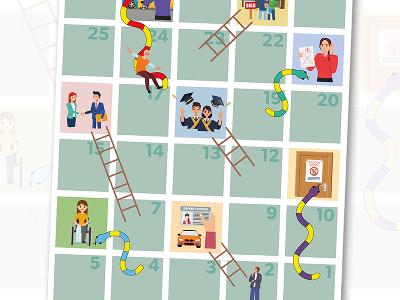
This report uses the analogy of a game of snakes and ladders to show how our lives are affected by these building blocks. The ladders enable people to thrive, while the snakes depict challenges that have a negative impact on wellbeing.
Throughout the report, you will get to know our 'Gateshead family', which shows how prevention can make a real difference to our communities.
You will also find out about the stark health inequalities faced by Gateshead residents. These stubborn challenges sit alongside a backdrop of austerity, welfare reform, the Covid-19 pandemic and the continued rise in the cost-of-living, all of which have had the greatest impact on those in the most disadvantaged social position.
This report sets out how prevention across the life course, guided by Marmot principles and the Building Blocks of Health, can change this trajectory. Action needs to be evidence based, outcome oriented, systematic, scaled up, resourced appropriately and sustainable.
Prevention is not just about social justice. Economic prosperity is directly impacted; there is no wealth without health, nor is there health without wealth. It is two sides of the same coin.
Vitally, prioritising prevention is to protect our beloved NHS. As set out in their recently published 10 year-plan, the future of the NHS rests on this - and we have a hugely important role to play in making this happen.
Our Gateshead Joint Strategic Needs Assessment helps us to understand the key issues facing people in Gateshead. Gateshead is the 53rd most deprived local authority in England, out of 296 local authorities. It shows there are currently 202,760 residents in Gateshead, and over 20% of them are aged 65 and over, continuing an ageing trend 1. A brief snapshot of data confirms that:
Gateshead is the 53rd most deprived local authority in England, out of 296 local authorities.
around 37,717 (19%) people in Gateshead live in one of the 10% most deprived areas of England.
extending that range further, nearly 70,472 (36%) live in the 20% most deprived 2
24.9% of Reception-age children overweight or obese (England average 23.5%)
37.4% of Year 6 children are overweight or obese (England average 36.2%)
30.5% of 5-year-olds have dental decay
there are higher rates of self-harm admissions among 10-24-year-olds than national average
This brief selection shows that there is room for improvement and that with the right action, some of the harms that arise could be prevented. This must be as important as dealing with the consequences of the harm.
Life expectancy - how long can we expect to live?
Life expectancy is how we measure how long people are likely to live, and it's not the same for everyone. Life expectancy in the UK was relatively stable from 2011-2019, but there was a sharp decrease over the years 20202021, largely due to the Covid pandemic. Globally, life expectancy has recovered beyond pre-Covid levels, but this has not been the case for the UK. Nationally, male life expectancy is 79.1 years with females at 83.1 years at birth for the period of 2021-2023. In Gateshead life expectancy is lower than the national average with male life expectancy at birth being 76.9 years and females at 81.5 years.
Two baby boys born on the same day in the same hospital in Gateshead, who live in different areas of Gateshead, can have a vast difference in how long they can expect to live. The life expectancy gap between most and least deprived areas of Gateshead is greater than 13 years for males and for females is greater than 9 years. Not only will one of these babies expect to have a shorter life, but they will spend more of that life in poorer health.
The reality is that people in more deprived areas live not only shorter lives but also spend more years in poor health compared to those in wealthier areas.
Healthy life expectancy (the time people can expect to live in good health) in Gateshead is just short of 56 and 57 years for males and females, respectively. On a human level this means people are struggling and suffering with ill health when it is avoidable. This is also 10 years before retirement age, meaning that more people are unable to work which impacts on the economic prosperity of the area.
These health gaps, or as we call them, health inequalities, are unfair and unavoidable. We don't all have the same opportunities to be healthy. They arise due to the circumstances people are born into, including things such as income, education, housing, and access to services. The chart below demonstrates the relationship between deprivation (as measured by Index of Multiple Deprivation or IMD) and life expectancy, essentially showing that people in poorer areas will have shorter lives.
Avoidable mortality
It is possible to positively impact on the figures above by identifying and acting on avoidable mortality. This term includes both preventable and treatable deaths, which can be avoided through public health interventions or timely healthcare, respectively, with treatable mortality specifically referring to deaths that could be prevented with effective medical care.
In 2023, the leading cause of preventable mortality in both England and Wales was cancer, followed by diseases of the circulatory system (heart and blood vessels) 3. Although the most common cause of avoidable mortality, deaths due to cancer have been steadily decreasing since 2001. Sadly avoidable mortality due to alcohol and drugs has been increasing since 2001.
The highest rates of avoidable mortality in 2023 were in the Northeast and Northwest of England, where almost 1 in every 333 deaths were deemed avoidable. This is in comparison to the Southeast and London, which have the lowest rates of avoidable mortality, where around 1 in every 500 were deemed avoidable 4.
Avoidable mortality is not equally distributed. Male avoidable mortality in the most deprived areas of England is 3.9 times higher than the most affluent, from 1 in every 166 deaths vs 1 in every 641 deaths. The same trend is also observed for females where avoidable mortality is 3.5 times higher in the most deprived than the most affluent, equating to 1 in every 273 deaths vs 1 in every 952 deaths.
Preventable mortality
Preventable mortality refers to causes of death that can be mainly avoided through effective public health and primary prevention interventions. We can see from the graph below that preventable mortality in the North East and Gateshead is higher than the national rates for both males and females. The rates for male preventable mortality are higher for males than females. Male preventable mortality has been increasing in Gateshead since 2012 whereas female preventable mortality over the same period has remained relatively static.
Treatable mortality
Treatable mortality refers to 'causes of death that can be mainly avoided through timely and effective healthcare interventions, including secondary prevention and treatment (that is, after the onset of disease, to reduce case fatality)'. We can see from the graph below that although treatable mortality in the North East and Gateshead is higher than the national rates for both males and females, though these rates have decreased over the last 20 years, bringing specifically the male rates closer to the national average. This is due in part to improvements in access to early diagnosis and more effective treatments.
From the graphs above, we can see that advances in treatment have reduced treatable mortality over the last 20 years but that there is much work to be done on preventable mortality.
This shows the need to shift from treatment to prevention if preventable mortality is to be addressed.
These unfair differences in health and wellbeing are avoidable to some extent if we choose to target resource and focus on them. This report will outline the importance of prevention in improving lives of those in Gateshead.
Prevention
Prevention has many different meanings. In this report, we use the term prevention, to mean the actions that help people remain in the best state of health and wellbeing for them, tackling the avoidable inequalities that undermine this, and therefore attempting to stop lives being cut short. Prevention refers to helping people to live longer and healthier lives by reducing the chance of illness in the first place and preventing the progression of symptoms once people become ill. 6Prevention is important because, as described earlier, many causes of ill health are preventable, and many deaths are deemed avoidable.7
We must recognise that avoidable mortality and illness are not evenly distributed throughout the UK or Gateshead, communities living with inequalities are disproportionately affected. Our poorest communities are facing not only shorter lives but also spending more of those years in poor health. This means that prevention is not only a strategy for health and wellbeing, but essential in social and economic prosperity. Interventions across the life course create cumulative benefits, reduce demand on acute services, and improve productivity.
By using Sir Michael Marmot's principles to reduce inequalities, 8and applying approaches like the Building Blocks of Health,9 we can create a framework for prevention and fairness. This allows us to rethink how we can prevent ill health occurring and progressing, while creating the opportunity to re balance the inequality between treatment and prevention. Prevention is fundamental to enabling the NHS 10-year plan's ambition to pivot from hospital to community, and from treatment to prevention. Applied at scale this will provide concrete and measurable benefits to the residents of Gateshead.
Health inequalities
Inequalities are unfair and avoidable differences that people face due to a range of factors and circumstances they experience. These can include things like where they live, go to school, the work they do, their income and housing situation. Other factors include age, gender, and ethnicity. All these things and others determine how people experience life and the opportunities that are open to us, in particular the opportunity to achieve good health and wellbeing.
This is recognised in the work of Sir Michael Marmot, whose reports (refs) have shown that the impact of inequalities falls most heavily on those who are less affluent and less able to navigate the complexities of the systems society builds. His policy objectives show where action should be focused to reduce inequality and improve equity. This is important because without conscious action, lives will continue to be cut short, as those most in need of support in our borough continue to have lower life expectancy and live more of their shorter lives in poor health.
Marmot's policy objectives:
Give every child the best start in life
Enable all children, young people, and adults to maximise capabilities
Create fair employment and good work for all
Ensure a healthy standard of living for all
Create and develop healthy and sustainable places and communities
Strengthen the role and impact of ill-health prevention
Tackle racism, discrimination, and their outcomes
Pursue environmental sustainability and health equity
The building blocks of health and wellbeing
To understand the health gap, we need to recognise the role the building blocks of health and wellbeing play in building healthy communities. Our health and wellbeing are shaped by the world around us. Building a healthy community is like constructing a sturdy building.10 To be healthy we need the right building blocks in place. Building blocks like good jobs, safe homes and neighbourhoods, enough money to support a healthy standard of living, high quality and easy-to-access services, supportive friends, and families and more.
Building blocks that are weak, missing, or broken result in poor health and health inequalities.
A deadly game of snakes and ladders
The game of snakes and ladders provides a stark metaphor for the health inequalities that we may face as we grow, live, work, and age.
Just as we cannot control the roll of the die in the snakes and ladders game, no one can choose the circumstances into which they are born. Disadvantage and inequity can shape our lives from the very beginning. Antenatal, and childhood living conditions, have a big impact on the chances of a long and healthy life. It's not unusual for a child who does not thrive to become an adult who does not thrive.
"Most of us cherish the notion of free choice, but our choices are constrained by the conditions in which we are born, grow, live, work and age."11
Sir Michael Marmot
Missing or broken building blocks of health and wellbeing, result in issues such as poverty, unsafe and unaffordable housing, limited access to healthy food, and lower levels of education. These issues act as 'snakes' causing setbacks in health and wellbeing which can contribute to an increased chance of serious illness and lives cut short. Strong building blocks, such as high-quality education, good jobs, easy to access health and social care services, and supportive social networks act as 'ladders,' advancing health and wellbeing.
However, the health inequalities we face over the course of our lives are not random. The building blocks of health and wellbeing are interconnected and interact in a complex and dynamic way. This means that people from disadvantaged backgrounds, who face one broken building block, may experience a domino effect across others, encountering multiple 'snakes' that damage their physical and mental health.
For example, poverty can force people into poor housing, which increases exposure to damp and mould, leading to respiratory illness as well as hospital stays which makes it difficult for them to work and pushes them further into poverty. People, from a wealthier background, may encounter more 'ladders,' such as help from their family to buy a house, or support from social networks to access work experience, increasing job prospects, and giving them more opportunities to improve their health.
By understanding more about the 'snakes' and 'ladders' which impact the health and wellbeing of people in Gateshead, the Council, and its partners, can increase their focus on prevention, to do more to address the causes of poor health and health inequalities. Acting to make the building blocks of health stronger isn't just about the avoidance of sickness. These actions can make a difference at every stage of life. If we can put more ladders in place, for the people who need them most, we can start to create a society where everyone has opportunities to be healthy.
Our Gateshead family
Throughout this report we will bring to life the challenges that people face due to missed opportunities for prevention with a series of case studies from a fictional, but realistic, Gateshead family. This will show the impact of missed opportunities for upstream action that can be transformational for people, making the case for why we need to prioritise prevention for our communities.
Mick
Age: 56
Relationship: Married to Carol
Children: Dan
Occupation: Former construction worker
Likes: Watching football on TV with a few beers
Dislikes: Being out of work, dealing with his back pain
Hopes: Why hope? Nothing ever goes right!
Fears: Dan will be on the dole long-term like himself
Carol
Age: 54
Spouse: Mick
Children: Dan
Occupation: Part-time care worker/unpaid carer
Likes: Going for walks (but she never has time)
Dislikes: Feeling guilty that she resents spending so much time looking after Mick and her mam
Hopes: To see the baby more
Dan
Age: 21
Relationship: Previously in a relationship with Maya
Children: Isla
Occupation: Just completed apprenticeship with large local employer
Likes: Going out with his mates
Dislikes: Missing Maya. Seeing Mam and Dad so unhappy
Hopes: For a good career so he can help Mam and Dad support Isla
Fears: Not being part of Isla's life
Sue
Age: 73
Spouse: Bill (died 3 years ago after living with dementia for many years)
Children: Mick, Brian
Occupation: Retired supermarket worker
Likes: TV soaps, her cat - Ivy
Dislikes: Feeling lonely and frightened of having another fall
Hopes: To stay in her own home and not go into a care home. Who would look after Ivy?
Fears: Being a burden to her family
Maya
Age: 19
Relationship: Previously in a relationship with Dan
Children: Isla
Occupation: Full time Mam. Wants to be a teaching assistant but needs to get the qualifications first
Likes: Cuddling Isla and watching her sleep. She is perfect!
Dislikes: Stressing about how to be a good Mam
Hopes: For Isla to be happy and healthy
Fears: Not being a good enough Mam
Baby Isla
Age: 74 months
Likes: Cuddles with Maya
Dislikes: Bath time
Hopes: None at present, but one day soon she will want to be a princess, and astronaut and a footballer!
Case study 1 - Mick's story
Mick comes from a family where the previous generations of men worked in shipbuilding, and he followed this tradition by pursuing a career in construction. This was not the only tradition that Mick inherited from the generations before him. He, like his dad, and grandad, had smoked since the age of 14, and drank a few cans of beer every evening. Sometimes, he drank more heavily at the weekend.
This started to change when Mick's working life was cut short by a serious back injury which permanently affected his mobility.
Being out of work really changed Mick's life. He lost his identity and things became tense at home when he could no longer support his family financially. This affected his mental health, and he began to become withdrawn and irritable with Carol, his wife, especially if he had been drinking.
As a proud man, Mick wasn't one to ask for help, but he eventually attended an appointment with his GP practice with Carol's encouragement.
During the appointment, Mick was able to discuss further treatment options for his back pain and was offered a health check due to his age. At the check, Mick was screened to assess the health risks from his continued regular drinking. The result showed him that his consumption of alcohol was at harmful levels, and by making changes, he could significantly reduce the risk of serious diseases like cancer. He was also encouraged to stop smoking and given details of the local Stop Smoking Service.
The healthcare professional recognised that Mick's low mood and increased drinking were linked to not being able to work, and the social connection his job provided. He was referred to a Social Prescribing Link Worker, who talked to him about a local Men's Shed support group. Initially Mick was reluctant, but due to the trusting relationship he had built with the link worker, he decided to give it a go.
Joining the Men's Shed didn't just give Mick his social life back - it also provided a renewed sense of purpose, which helped motivate him to make other changes.
Mick went on to cut down on his drinking and successfully switch from smoking tobacco to using a vape from the Stop Smoking Service. It took him a few attempts, but he stayed positive and always tells people that if he can do it, anyone can.
Mens Sheds are community spaces for men to connect, converse and create. They help to reduce isolation and loneliness whilst having fun, and taking part in activities that are similar to a garden shed. (menssheds.org.uk)
Residents in Gateshead can access a free vape device, or other stop smoking products, as part of the Stop Smoking Service offer in Gateshead. While traditionally the support is given as part of a 12 week plan, flexible approaches can be offered. The most important message is that all smokers are encouraged to continue to attempt to quit. The Gateshead Stop Smoking Service will link in with people in a way that fits in with their life, whether that is alongside regular face to face support, or virtually via the Stop Smoking app. We recognise that help to stop smoking is not a one size fits all approach, and the Gateshead offer reflects this. More information can be found at Smokefree Gateshead or Local stop smoking support | Fresh.
The snakes and ladders in Mick's story
Snakes
Employment: The type of work Mick did contributed to his physical health problems. Each year, approximately 300,000 people in the UK suffer from back pain due to a manual handling accident, resulting in extreme pain, and temporary or permanent injury due to damage to the back, neck or spine.1 Studies of musculoskeletal disorders in male construction workers in the UK show significant raised standard incidence rate ratios.2
Decent work boosts mental health by providing income, purpose, confidence, routine and meaningful social connection amongst many other benefits. (WHO, 2024)3 When Mick became unemployed, he experienced poor mental health as a result of a of these factors.
Income: People in poorer communities face greater alcohol related related harm, even though they often drink less than those in more affluent areas. Unemployed people and those in routine and manual occupations have a higher proportion of current smokers than other professions (ONS 2024).
Ladders
Access to services: Mick used free stop smoking smoking support, helping him improve his health and save money. Quitting smoking significantly reduces the risk of cancer, heart disease and stroke, COPD and dementia. Vaping - while not risk free free - is far less harmful than smoking and can help adults quit (freshquit.co.uk).
Mick was also given Alcohol Identification and Brief Advice (IBA) during a GP appointment. IBA is a quick intervention proven to reduce drinking by 4-8 units a week, with 1 in 8 people cutting down after receiving it. This early advice helped Mick make changes before his drinking became harmful or required specialist treatment.
Upping prevention
With alcohol harms at record highs, prevention and early intervention are essential to reverse the impact on our communities and to support population approaches to ensure people in Gateshead are better informed. We also need strong national action to shift the culture of drinking at harmful levels - making alcohol less desirable, acceptable, affordable and accessible, drawing on what we've learned from tobacco control.
Public health and prevention
Public health is a field of study and work which takes a population (rather than individual) level focus on improving health, tackling inequalities, and promoting equity through collective responsibility and action. The Faculty of Public Health defines it as:
"... the science and art of preventing disease, prolonging life, and promoting health through the organised efforts of society."
LA role of public health in driving prevention
Public health teams within local authorities have a statutory responsibility to improve population health and reduce inequalities. This leadership role is pivotal because prevention requires system-wide coordination across health, social care, and community partners.
Why public health leadership matters
Strategic vision: Public health undertakes surveillance of population health, provides the evidence base and sets the strategic direction for prevention, ensuring alignment with national frameworks (such as the Marmot Review, NHS Long Term Plan) and local priorities.
Whole-system approach: Prevention is not solely a healthcare issue; it spans housing, education, employment, transport, and environment (the building blocks). Public health teams lead on embedding "Health in All Policies" across council functions and influencing partners.
Prevention can be viewed at various levels. This includes broad actions at population level that aim to strengthen the building blocks of health and wellbeing and so prevent problems arising in the first place. This work is complex as it requires action at different levels across multiple organisations over longer time periods. Then there are more specific interventions that seek to minimise existing harm and provide early diagnosis and treatment, for example the provision of community sexual health services. This prevention work tends to be more distinct and measurable, and this often leads to much more effort and resource being focused here. This is important of course, but without sufficient action at primary level the root causes will continue, and demand will keep growing. This is itself a form of inequality.
In 2024/25, the Department of Health and Social Care (DHSC) budget was £192bn. This funds the delivery of health care and public health services in England. Of this budget, 86% (£165bn) goes to NHS England to cover the breadth of NHS clinical services as well as NHS public health responsibilities like screening and vaccination. The rest of the DHSC budget is allocated to capital spend, the department's arm's lengths bodies - such as the UK Health Security Agency, the National Institute for Health and Care Research - and the ringfenced public health grant to local authorities .
In 2024/25, the total public health grant was £3.6bn - equivalent to 2.2% of the NHS England budget, down from 2.9% in 2013/14. Although public health services funded through the grant have been de prioritised relative to other parts of the health system, they generally offer excellent value for money - costing an average of £3,800 for every additional year of good health in comparison with NHS treatment, which costs £13,500 for the same.
Overall, estimates suggest around 5% of health care spending is allocated to funding prevention13.
Exploring prevention
Prevention is sometimes classified into different 'levels,' based on acting at different points:
Health creation - action to prevent exposure to risk factors in the first place by ensuring the building blocks are in place and are robust. This tends to focus on population-wide interventions on a range of social determinants of health, such as poverty reduction, taxes on unhealthy food, or ensuring access to parks or other green spaces for exercise or relaxation.
Primary prevention - action to reduce exposure to risk factors, such as stopping smoking, improving the food on offer, and limiting alcohol advertising. This is also about mitigating the impact of risk factors once exposure has occurred- for example, vaccinations to increase resistance to disease if exposure occurs.
Secondary prevention - emphasises early disease detection by identifying disease before symptoms have progressed and stopping the disease worsening, if possible. For example, a hospital-based mammogram following a GP referral for symptoms. Tertiary prevention - action to help people manage symptoms and prevent further disease progression once the disease has already developed. This can be thought of as harm reduction and helping people manage their disease. For example, a specialist-led cardiac rehabilitation in a hospital setting for someone who has already had a heart attack. In this sense, certain types of health care treatment are a form of prevention14.
This diagram gives examples of different types of prevention for lung disease across the spectrum of prevention:
Health creation is a recent addition to this framework, which has been added to take account of the social factors that impact on health and wellbeing. Of course, these levels are not set in stone as this is a complex picture, and the course of ill health is variable. However, the framework provides a useful way of understanding prevention and where action can be taken. As mentioned previously, most of the resource goes towards the secondary and tertiary levels which more closely align with the traditional clinical focus.
Preventing inequalities is about more than fairness. It is about social justice. In all aspects of inequality, it is those with less that suffer more. This causes shorter lives which are more likely to be lived in ill health. This causes suffering for individuals, families, and communities, and increases stress and social anxiety, which promotes isolation and affects our ability to build relationships and therefore, functioning communities.
Disadvantage gets passed from generation to generation where children inherit the inequalities and lack of opportunity experienced by their parents, resulting in an endless cycle. There is a wider societal impact in economic terms as people are less able to work and earn an income which would normally increase social mobility. However, the legacy of austerity, benefit system reform, and the cost-of-living crisis makes that less likely.
Equally, as people live shorter lives in worse physical and mental health, the demand on public services increases. Where there is economic inequality in a society, everyone in that society is affected.
This all makes a conversation about prevention timely, and thankfully this is recognised within the NHS 10-year plan which calls for a pivot from treatment to prevention, and for care to be focused within communities rather than hospitals. These are bold ambitions, but the headline message doesn't begin to convey the complexity of making this a reality. At a time where savings need to be made and where the demand continues to increase, services designed to react to acute need at the tertiary end of the prevention spectrum are being asked to get 'upstream' into primary prevention. However, they are still accountable for delivering what they always have, and this is how their performance is measured.
There is strong evidence that more effort on prevention can improve the health of our population, and there has often been enthusiasm about the potential of prevention. But action hasn't fulfilled this potential so far. There are various reasons for this:
as mentioned above, there is a lack of clarity and understanding about what we mean by prevention - this means it can be used as a solution to different complex issues, and gain support, but that complexity often means there is limited subsequent action
another issue is political - spending and performance measures are often focused on short-term, more acute goals, such as emergency care or the NHS waiting list. And the benefits of some prevention activities are more likely to occur in the medium term - outside of short-term budget considerations and political or electoral cycles15
finally, prevention is invisible because the benefits of spending or activity may not be felt directly by the organisation that undertakes it, meaning it is difficult to measure impact, to coordinate, or to make the case for investment - our organisational confines don't always recognise that we serve the same population
To achieve prevention requires the different parts of the public sector, and crucially, our Voluntary, Community and Social Enterprise partners (VCSE), to work together in a meaningful way to act on the building blocks of health and wellbeing. A useful model to visualise this system led place-based approach is the the Population Intervention Triangle.16
Whilst the building blocks of health shows what we need to change, the Population Intervention Triangle helps us to understand how we can change things. It shows three types of action that, when combined, can make a bigger difference than any one on its own. In turn this requires organisations to work differently and be freed up from project-based planning and performance management norms to encourage innovation, collaboration and learning over longer time periods. If this occurs, primary prevention may become more mainstream and turning down the pressure on secondary and tertiary service provision.
The shift from treatment to prevention requires strong senior leadership and a shared commitment to action, but there is also a need to enable flexibility within traditional organisational practices to make it possible. For instance, the pooling of budgets to provide resource and relaxing of the requirement for all work to be subject to short term operational key performance indicators (KPIs) which are more suitable for transactional services but can't take account of longer-term efforts which have complexity, collaboration, and transformational aims. These are better evidenced by the monitoring of longer-term trends and changes in the lived experience of people.
The risk is that this remains secondary to individual organisations' priorities, targets, and governance, and to the services they presently supply. This is after all how organisations are measured and judged, and the time and effort to unravel complexity isn't incentivised in systems driven by results and performance. This means that the default position when change is required, is often to pour more focus, energy, and resource into making existing services better or building new structures and services at pace using existing principles and practice. This leaves little room for the high level, well evidenced, and agreed collaboration that is needed to ultimately improve population health and wellbeing and to reduce demand in a sustainable way. Admittedly this is complex and relies on policy change nationally as well as action at regional, sub-regional and local levels, but that doesn't reduce the moral and economic imperative of 'getting upstream.'
Moving prevention upstream
By shifting our focus upstream, we can prevent harm to health and wellbeing before it occurs or reduce it as soon as possible.
Some prevention activities don't fit neatly into just one category. For example, a community project that offers social groups, activities, and advice can deliver:
primary prevention: it helps stop problems before they start by boosting confidence, reducing stress, and helping people feel connected
secondary prevention: it also helps people deal with problems early by building skills, support networks, and resilience to face challenges like money worries, mental health, or finding work so reducing the need for tertiary services
Case study 2 - Carol's story
Carol is worn-out. She juggles work, caring for Mick and her mam, and keeping on top of the family's money. She's also more stressed than she's ever been, as it's getting harder to pay the bills and do the food shopping with prices going up and up.
Carol used to have more energy, but lately she's been exhausted. Since Mick's accident, he's needed some help with small tasks, but these days, he also needs help to get showered and dressed.
She also takes care of Sue, her mam, after she had a stroke two years ago and now lives with balance issues. Carol loves her mam, but now feels responsible for her shopping, daily errands like laundry, and making sure she's eating well.
Despite keeping an eye on what her mam eats, she's taken to comfort eating after a long day and has recently noticed even her most comfortable jeans getting tighter. The weight gain doesn't make her feel better, even though the food helps to keep her going. She worries that she might end up with a heart problem, or even a stroke, like her mam. After eventually finding the time for a GP appointment to share her concerns, Carol got some tests done. She was prescribed medication to lower her blood pressure and reduce her risk of heart disease. She was also referred to the Social Prescribing Service to see a Link Worker, after hearing about her struggles.
The Link Worker had time to listen and understand what matters most to Carol. The Link Worker accompanied her to an appointment at Citizens Advice Gateshead, where she received guidance on Carer's Allowance, Universal Credit, and debt management. Citizens Advice also assessed the wider family's needs. Advisers explained benefit entitlements to Mick and Carol's mam and reviewed the household's finances. The Link Worker also introduced Carol to a carers' support group and free local health walks, going with her at first to help her feel less anxious.
Carol now feels more informed about her rights and benefits. Money is still a worry, but she feels more in control, which helps with the stress she's been under and the comfort eating.
She enjoys her weekly health walk and looks forward to the carers' support group, where she has made new friends and can get things off her chest with people who understand what she's going through.
Cardiovascular diseases (CVD) such as stroke and heart disease are largely preventable, yet they remain a leading cause of disability and death, with CVD causing one in four deaths in England.... The burden of CVD does not fall equally, with people in the poorest parts of the country much more likely to die from a cardiovascular disease.'Sarah Woolnough, Chief Executive, The Kings Fund 2024
Social prescribing helps people with non-medical issues that affect health and wellbeing. Link workers listen, offer practical and emotional support, and connect people to local services. Social prescribing is available across all GP surgeries in Gateshead, with the charity Edberts House providing social prescribing services across 18 GP surgeries, as well as in palliative care and with community midwives, helping residents access support, build confidence, and improve wellbeing. Edberts also delivers community development through local houses, fostering connections and opportunities that promote wellbeing across Gateshead: edbertshouse.org
Health care only accounts for around 10%-20% of a population's health. As Sir Michael Marmot says, ''Why treat people and send them back to the conditions that made them sick? As Carol's story suggests, medication alone is not the answer, we need to address all the factors contributing to ill health.
The snakes and ladders in Carol's story
Snakes
Struggling to provide the basics for your family can cause constant anxiety and, over a prolonged period, may result in chronic stress, damaging both mental and physical health. When we have enough income, it's easier to access all the building blocks needed for good health. 6
Choices about what food to eat are shaped by environmental factors such as cost and availability (healthier foods are more than twice as expensive per calorie than less healthy foods and less available7) and personal circumstances, including the pressures we face. Stress can lead to comfort eating, making it harder to maintain a healthy diet and increasing the risk of heart disease.
Ladders
Carol was able to access social prescribing, to support her with the social and economic causes of her health problems, as well as the medical care that she needed. This is increasing the chances of a sustained improvement in her health and wellbeing.
There is lots of evidence to show that exposure to green space, particularly urban, is associated with improved psychological well-being, physical activity and linked health outcomes.' Natural England, 2024. One recent study found that an Increase in green space was associated with fewer preventable deaths in the most deprived neighbourhoods.8
Upping prevention
People need accessible and timely healthcare. People also need support close to home from trusted organisations that can work with them to address the missing or broken building blocks needed for a healthy life. The renewed focus on place-based working, in the NHS, Council and partners brings new opportunities to transform prevention and reduce health inequalities. Collaboration across the Council, NHS, VCSE and with communities is key to harnessing our efforts and make the biggest difference.
Why we should prioritise prevention
In 2023, more than 1 in 8 deaths (13.9%) in England were considered preventable at the time of death - that's 75,694 people. 17 Evidence suggests conditions such as chronic pain, type 2 diabetes and anxiety and depression contribute most to these inequalities 18 and all of these are amenable to prevention. Based on current trends we know that inequalities will persist over the next 20 years and that the burden will be felt most in our poorest communities.
Without preventive action these conditions will increase at a faster rate in poorer communities by 2040 with people in the 10% most deprived areas can expect to be diagnosed with major illness a decade earlier than people in the 10% least deprived areas:
Specific action on prevention is required to address these inequalities and that is why we should prioritise prevention. Because it's the right thing to do. It helps people stay healthy and live longer by reducing the chances of getting ill, or by stopping illnesses from getting worse. This means people can enjoy life more and live independently as long as possible. They will contribute more to their communities and to economic prosperity and high demand for treatment can be lowered. Prevention helps everyone, not just those already affected. Primary prevention works across whole communities, making health fairer and reducing inequalities. If we don't act, the health gap is forecast to increase.
It reduces stress, building stronger, more resilient communities. While stress is a normal part of life, too much of it for too long can harm both mental and physical health. Strengthening the building blocks of health - like enough money, safe housing, education, and social networks means people feel less stressed and are more able to cope with life's challenges.
It saves money and resources. Preventing illness is often cheaper than treating it later, reducing pressure on health and services.
"Primary prevention is 3-4 times more cost-effective than investing in treatment. The return on investment (ROI) for £1 invested was £34 for health protection (for example vaccines and immunisation) and £46 for legislative interventions (for example the ban on smoking in public places.)"19
It has a wider economic benefit as people are more able to contribute to society through employment or other activity.
Prevention is often perceived as a cost, but evidence shows it is a high-value investment that reduces long-term health and social care expenditure, improves productivity, and strengthens local economies. However, we need to be wary of using return on investment as a measure.
Evidence shows that public health interventions are highly cost-saving, especially national and legislative measures, and that reductions in public health funding represent a false economy, likely leading to billions in additional costs for health services and the wider economy. The evidence strongly supports investment in prevention over treatment20.
Economic case Cost of preventable illness to NHS and social care (e.g., smoking £2.4bn, obesity £6bn). 21
Evidence base Cost-effectiveness of public health interventions (e.g., measurable gains from prevention vs treatment). 22
Policy drivers Government vision for prevention, local strategies, and integrated care systems. 23
National evidence
Public Health ROI: For every £1 spent on public health interventions, there is an estimated £14 return on investment through reduced healthcare costs and improved productivity. 24
Smoking: Costs the NHS over £2.4 billion annually; effective cessation programmes deliver savings within 2-3 years.
Obesity: Estimated cost to the NHS is £6 billion per year, projected to rise to £9.7 billion by 2050. Local prevention programmes reduce future treatment costs and disability burden.
Mental Health: Early intervention for depression and anxiety saves £2 for every £1 invested by reducing lost workdays and healthcare use.
Local Gateshead context
High deprivation impact: Poor health linked to deprivation drives demand for costly acute services. A&E attendances in England are significantly higher when comparison is made between 10% most deprived areas (18.8%) and 10% least deprived areas (5.3%) in England for high intensity use i.e. individuals attending A&E 5 or more times per year.25
Hospital Admissions: Preventable conditions (for example, cardiovascular disease, COPD) account for a significant proportion of emergency admissions. Across Gateshead and Newcastle emergency hospital admissions for acute conditions for male and female that should not usually require hospital admission were 1091 per 100,000 population, significantly higher than the national figure of 848 per 100,000.26 Nationally evidence suggests as many as 6million (3%) emergency admissions to hospital due to preventable conditions such as COPD could be prevented.27
Workforce Productivity: Preventive action improves economic participation. There is a clear association between ill health and economic inactivity and equally good health driving improved economic activity. 2829 In Gateshead 31,000 people (24.4%) of working age (16-64years) are economically inactive compared to only 21% nationally (Oct 2024-Sep 2025).30
Why invest now
prevention reduces future demand on NHS and social care budgets
supports economic growth by enabling residents to work and contribute
aligns with Integrated Care System priorities for sustainability
Case study 3 - Dan's story
Dan did not find his childhood easy, but as it was all he knew, he didn't realise that others weren't faced with the same challenges.
Growing up, his family didn't have much money, and drinking was the main hobby of the men he was around at home.
When his dad Mick accepted support to reduce his alcohol use and stop smoking tobacco, Dan was also offered support from Positive Futures, his local young people's drug and alcohol service, and quit smoking completely - inspired by his dad.
The team at Positive Futures helped Dan express himself with creative activities and to feel safe in sharing his worries about his family. Although Mick was never physically dependent on alcohol, and he never hurt him or his mam after drinking, what Dan witnessed growing up still had an impact on him - it was always hard to see how his dad went from being the life of the party to being at home most days.
Dan was never keen on school, but stayed on until he was 18, as he saw how important money was and wanted to have a well-paid job to make things easier on mam.
He worked hard and as a result was accepted onto an apprenticeship with a large local employer.
He was proud to earn his own money, all while gaining experience and qualifications to progress his career.
Things outside of work were looking up for Dan, too. He met Maya shortly after starting his apprenticeship, and Maya moved into the family home. Although the relationship ended soon after Maya became pregnant, Dan was still keen to be a good dad, but he felt like he lacked the skills and confidence to know how to do it. Support from the North East Young Lads and Dads enabled Dan to have the tools to play an active and meaningful role within Isla's life, and he's keen to keep progressing in his career to support his family as best he can.
North East Lads and Dads provides support to young fathers, expectant dads and non birthing partners (aged under 25) who live in Gateshead, South Tyneside or Sunderland (neydl.uk)
Positive Futures are the specialist drug and alcohol service for Children and Young people in Gateshead. Part of the service offer is the support they give to children and young people between the ages of 5 - 18 who may have been affected by someone else's drug or alcohol use. This provides a safe space for them to explore their feelings to enable them to cope with difficult family situations and feel stronger in themselves.
The snakes and ladders in Dan's story
Snakes
Adverse Childhood Experience (ACE's) are traumatic events a person experiences in childhood that are strongly linked to poorer health outcomes throughout a person's life. Exposure to harmful alcohol use may lead to lifelong impact, including an increased risk of developing harmful patterns of alcohol use later in life.
Environment - Children and Young People are affected in many ways by parental problematic alcohol use, yet it is an issue that for many remains hidden. Children find strategies to cope with the environment they find themselves in, but this is not the same as developing resilience. Early identification, trusting relationships with professionals, peer support, and a whole family approach have been highlighted as being valued by children. (Silent Voices - assets.childrenscommissioner.gov.uk)
Ladders
Access to services - Dan had access to some key services as a child and young adult which have provided him with the ladders to overcome some of the potential snakes in his life. Early identification of need, and the provision of appropriate 'upstream' services often prevent the need for more intensive support further downstream.
Education and Training- Supporting employment- The services Dan had access to enabled him to make the most of his education Dan stayed at school until he was 18 and then was lucky enough to be accepted onto an apprenticeship with a large local employer. Through this he gained experience and qualifications whilst earning a wage. At the end of his apprenticeship, Dan was kept on by the organisation and is in a really good position to progress his career. This is important to him as he wants to be able to provide for Isla, even though he and Maya are no longer in a relationship.
Upping prevention
The Tobacco and Vapes Bill is part of the 10 Year Health Plan for England. From January 2027 it will become illegal to sell tobacco to anyone born after 1 January 2009, creating a smokefree generation, and giving our future generations a life free from cancer causing addiction. (fresh-balance.co.uk)
A life course approach
Using the life course approach 31 provides a lens through which to view the range of preventive actions that can be taken at different stages of life, which can create cumulative benefits.
Broadly we can split the life course into three areas where we can intervene:
Starting well:covers preconception, infancy, early years through to adolescence.
Living well: covers working age and adults from 16-64 years.
Ageing well: adults aged 65 and over
If we cross reference the primary, secondary, and tertiary prevention with the life course approach, it allows us to visualise some of the activities and interventions that can help in prevention efforts, though the examples below are a small selection only:
Starting well:
Primary prevention: maternity care, health visiting, childhood vaccinations, school readiness, oral health, school nursing programmes
Secondary prevention: Developmental screening, oral health checks.
Tertiary prevention: Support for children with complex needs.
Living well:
Primary prevention: Workplace wellbeing, active travel, mental health promotion, community cohesion and resilience
Secondary prevention: NHS Health Checks, mental health early intervention, smoking cessation interventions
Tertiary prevention: drug and alcohol services, long-term condition management, rehabilitation.
Ageing well:
Primary prevention: mobility and physical activity, falls prevention, social connectivity.
Tertiary prevention: Integrated care for chronic illness.
Gateshead's Health and Wellbeing strategy
In Gateshead, the overarching approach to reducing inequalities and using prevention at a population level is our evidence-based joint local Health and Wellbeing Strategy. It is crucial because it sets out our shared ambition to close the health gap in Gateshead, it is a key enabling partnership strategy, using our collective resources, to drive forward improving health outcomes for everyone.
To achieve our vision, we know the importance of working together, across Gateshead, with communities, breaking down boundaries between organisations and services. The strategy serves as an overarching framework for Health and Wellbeing Board partners, providing a shared vision and strategic direction that helps align the efforts of organisations across the borough.
Our Strategy has been developed and agreed by our strategic partners. It is delivered with the different organisations in the Gateshead Health and Wellbeing Board through all our combined existing strategies, policies, and plans, with our health and wellbeing vision and principles embedded in everything we do. The Strategy recognises that our health and wellbeing are shaped by the world around us. Building a healthy society is like constructing a strong and sturdy building. We need the right building blocks in place. Building blocks like good jobs, safe homes and neighbourhoods, good quality and easy-to-access services, supportive friends, and families and more.
It is useful to cross-reference Marmot's Policy Objectives with relevant Building Blocks to help visualise where action should focus:
1. Give every child the best start in life
Building blocks: Income, education, housing
Actions: Expand early years programmes, tackle child poverty, parenting support, school readiness.
2.Enable all children, young people and adults to maximise capabilities
Building blocks: Education, social connections
Actions: Improve educational attainment and digital inclusion, skills development, youth engagement
3. Create fair employment and good work for all
Building blocks: Work, transport
Actions: Target insecure work and unemployment in deprived wards, local employment initiatives, workplace health
5. Create and develop healthy and sustainable places and communities
Building blocks: Housing, environment, transport
Actions: Invest in active travel infrastructure and green spaces; improve housing quality
6. Strengthen the role and impact of ill-health prevention
Building blocks: Education, social connections
Actions: Improve educational attainment and digital inclusion, skills development, youth engagement
7. Tackle racism, discrimination, and their outcomes
Building blocks: Social connections, education
Actions: Embed equity audits and cultural competence in services, inclusive services
8. Pursue environmental sustainability and health equity
Building blocks: Environment
Actions: Embed climate resilience in health planning, energy efficiency, sustainable food systems
Health and wellbeing in all policies
Taking a Health and Wellbeing in All Policies' (HiAP) means making the most of every opportunity to improve health and reduce inequalities by considering how decisions in any area affect people's health and wellbeing. It is most effective when different organisations, services and sectors work together. It is a well-established established approach, formally supported by the World Health Organisation.
A HiAP approach enables councils and other local organisations to take preventative action by recognising that many of the most important building blocks of health - such as housing, transport, planning, education, green space, licensing, and economic development - sit outside the traditional health sector. By systematically considering the health and wellbeing implications of decisions made across system and place-based partners, we can seek to maximise health and wellbeing, reduce avoidable illness, and narrow health inequalities at the earliest stage.
Embedding HiAP within Gateshead Council is strengthening prevention at organisational level. We want to make sure that every strategic decision - from urban planning to social care commissioning - actively contributes to a healthier population and reduces future demand on services.
Case study 4 - Sue's story
After a stroke two years ago, Sue often feels wobbly on her feet. She fell in the street last year and broke her wrist, which has left her feeling afraid to go out. She used to enjoy bingo with friends but no longer feels able to manage it and is becoming isolated. She now relies heavily on her daughter, Carol, for getting out to appointments and having regular hot meals.
Sue lives in a privately rented home that has become damp, with mould starting to show in several rooms. She often has a bad chest and struggles to move around. She needs a handrail on the stairs to feel safe, but her landlord has not been helpful with repairs or adaptations.
Despite these issues, Sue doesn't want to move - she has happy memories of living there with her late husband, Bill, and worries how a move would affect her beloved cat and best pal, Ivy.
After asking Carol to help her find out who she can complain to, Sue contacted Private Sector Housing at the council to report that her landlord had not carried out her repairs.
An officer for the team inspected Sue's home to check what repairs or improvements were needed and the landlord received a formal notice covering all the necessary repairs. With their help, the landlord finally carried out repairs that fixed the damp and mould.
The council also referred her to Adult Social Care Direct, which led to a banister rail being fitted in her home.
Since then, Sue's health has improved and she is visiting the GP less regularly, but her latest visit really helped her continue improving on her own.
At her last appointment, Sue's GP referred her to a programme to help improve her strength and balance. Each week for the 14-week programme, she is picked up by a taxi , because of her mobility issues, and taken to the local leisure centre for an exercise class designed to prevent falls for people who are over 65 and are mild or moderately frail. Sue now does her exercises at home every day and has made a new friend from the course. They plan to go to a local community exercise class together once the programme ends.
The council's Private Sector Housing team are there to help tenants in the private rented sector when their landlord does not carry out repairs. Landlords are legally responsible for repairs to the structure of the building: the roof, windows, doors, drains, gutters, baths, sinks, toilets, heating, hot water, damp and general building repairs. The team must make sure all health and safety standards are met and that landlords who commit an offence could have legal action taken against them.
The Otago (Strength and Balance) programme in Gateshead provides evidence-based exercise classes and one-to-one home support to improve strength and balance, promoting long-term benefits. It is delivered through a partnership between Gateshead Council and Gateshead NHS Foundation Trust.
Gateshead has the highest rate of hospital admissions due to stroke in England. A stroke is when blood stops flowing to a part of your brain and is one of the leading causes of death in the UK. Many patients who survive a stroke will live with a disability as a result of their stroke.
The snakes and ladders in Sue's story
Snakes
Factors such as poor housing design and inadequate neighbourhood lighting are linked to a higher risk of falls among older adults.
It costs the NHS around £1.4bn per year to treat people who are affected by poor housing. The most common extreme hazards likely to be found in the home are those relating to cold and home accidents, particularly falls on stairs.11
35% of the retirement age population in Gateshead and Newcastle feel lonely at least once a day. 12 Loneliness and social isolation increase the risk of stroke, heart disease, diabetes, cognitive decline, and premature death. It also affects mental health, with people who are lonely twice as likely to get depressed.13
Ladders
The Council's Private Sector Housing Team helped fix a key building block of health for Sue, by making her home a safer and more comfortable place to live, and helping to prevent further illness, accidents and healthcare.
A key factor, in enabling Sue to participate in the Strength and Balance (Otago programme) was the transport provided to get her there due to her mobility issues. The whole programme increased her strength, mobility and reduced her fear of falling so improving her quality of life and reducing her future needs for support from health, social care and her family.
Upping prevention
Falls have significant impacts on older people, families, communities, and health services, but they are preventable and not an inevitable part of ageing. There is a strong moral, social, and economic case for investing in falls prevention. In Gateshead, falls admissions cost around £4.73 million annually (based on £5,200 per admission and a 12-day hospital stay), and this doesn't include wider system costs. Increasing focus on community-based falls prevention and creating safer environments is essential to reduce risks and support older people, in an ageing population.14
Partnership
Addressing the health and wellbeing challenges we face in Gateshead requires collaboration because the ability to take preventative action on issues such as the building blocks of health lies across society and not within the control of any one organisation. Collaboration and place-based system working needs to become business as usual and there is a real opportunity to make this a reality at present, to create a system where preventative action becomes second nature rather than an optional addition.
Done properly, all stakeholders (including residents) could be included in decisions and service design to make sure that people's needs are met not just within an organisational context, but through a lens that takes account of their views and where they live and work. This makes collaboration crucial and the Health and Wellbeing Board, with its statutory responsibilities for the Joint Strategic Needs Assessment and the Health & Wellbeing Strategy, has a central leadership role in steering this work and ensuring its alignment to local priorities.
The recent NHS 10-year plan can be a defining moment of opportunity for the health and care system. It sets the strategic direction for the NHS and provides a timely opportunity to focus on prevention and collaboration. It identifies that three strategic pivots are required:
Hospital to community: more care available on people's doorsteps and from the comfort of their own home.
Analogue to digital: new technology to liberate staff from time wasting admin and to make booking appointments and managing people's care easier.
Sickness to prevention: reaching people earlier, to catch illness before it spreads and prevent it in the first place, by making the healthy choice the easy choice.
Each of these speak to the need to intervene earlier to prevent the health and wellbeing problems society faces and where that is not possible, to mitigate the impacts of the illness that ensues.
For example, the pivot from hospital to community provides a real opportunity for collaboration. As systems are increasingly required to deliver more preventative, joined up care within constrained resources, neighbourhood based approaches offer a practical and effective route to improving outcomes while reducing health inequalities. Neighbourhoods provide a scale at which partners can work collectively with communities, align services around local need, and take early, preventative action.
The NHS as a whole is a critical partner in this work and has a crucial role in delivering prevention from health creation to tertiary efforts as its role goes beyond treatment to actively shaping population health through its anchor institution status, clinical interventions, digital innovation, and community partnerships. Local authorities have a role through public health responsibilities and through building block services such as planning, housing, education, social care, and economic development. Likewise, VCSE organisations and their role in mobilising community assets, co-producing interventions, and reach into vulnerable groups.
Agreement of a clear framework to drive the required system working on the three pivots would provide a shared foundation to help Gateshead translate national ambition into consistent, locally led prevention-based action. Following the evidence base to create guiding principles would be a logical step to support the development of governance and infrastructure to allow development and delivery of the the three pivots that are person-centred, preventative, and grounded in local data, community assets and lived experience.
This would create the environment for a collaborative approach that could:
provide system-wide leadership and collective accountability
enable shared governance, shared risk and shared decision-making
create the infrastructure for delegated budgets and integrated commissioning
lead development of the place-based Neighbourhood Health Plan
Viewing this opportunity through a treatment to prevention lens, there is a once in a generation chance for joint planning including all stakeholders to embed prevention, reduce unfair inequalities, develop co-produced services, and build this into community infrastructure.
Challenges
There are persistent barriers to achieving the collaboration needed. These include:
suspicion, lack of trust and inconsistent collaboration between sectors
siloed decision-making driven by organisational pressures
fragmented and inconsistent information sharing and digital systems
workforce capacity
historical practices that incentivise protectionism and prioritise short-term transactional approach
These have always been there and affect all organisations but will need to be overcome and there are some enablers that will help with this:
Enablers
explore joint commissioning of evidence-based prevention programmes
collaborative action on wider determinants of health, including housing, employment, and transport
shared and compatible digital systems for information sharing
place-based population health dashboards
workforce and prevention activity mapping across all partners and joint workforce planning
clear leadership capacity for programme delivery
Case study 5 - Maya's story
Maya found out she was pregnant when she was 18. She was living with her boyfriend, Dan, and his Mam and Dad at the time.
She was anxious about being pregnant and it was all she could talk about, but Dan seemed to prefer spending time with his mates, which lead to a lot of rows.
After splitting up with Dan, she needed to find a new place to live. His Mam said she could stay as long as she liked, but it was too awkward for her.
She moved in with a friend, and despite still feeling anxious about her pregnancy, got support from Gateshead's Family Nurse Partnership (FNP). They helped her to find a safe and stable home, as her friend's sofa was only a short-term solution, and worked with her to build her confidence.
They referred her for a Baby Box, which included toys, books, a tooth brushing kit and a mat and towel for when the baby arrived. They also supported her with breastfeeding, which Maya found tricky at first, but with their continued support kept going.
Dan went with Maya to Blaydon Winlaton Family Hub to register Isla's birth. It was closer than the Civic Centre and they both wanted to be named on the birth certificate. Whilst they were there, they found out about activities and support that they could go to with the baby.
Despite parting ways, Dan and Maya regularly took part in a range of fun, stimulating activities that supported Isla's development at the Family Hubs. Over time, they built a trusting relationship with Jo, the Parent Outreach Worker, who provided parenting advice, practical support and helpful information about local services.
Isla is now 4 months old and Maya is enjoying being a mum. She has made friends through a parenting group at the Family Hub and is beginning to think about training opportunities for when she's ready to go back to work.
The FNP is a licensed programme that is part of the'Growing Healthy Gateshead 0-19' service delivered by Harrogate and District Foundation Trust, commissioned by Gateshead Council. They work with clients to be sensitive and responsive parents, exploring parenting theory and concepts and to support emotional health.
The snakes and ladders in Maya's story
Snakes
Poverty: Children in deprived areas face poorer early development and higher health risks15, while stigma and poverty limit access to mental health support. 16
Homes: Housing insecurity is linked to health problems, developmental delays, and emotional stress for children and young people as well as their parents.17
Mental health: One in four women experience mental health issues around pregnancy, which can also negatively affect their children's physical and mental health and development.18
Ladders
Access to services: Maya and Isla benefit from the Family Nurse Partnership (FNP), an intensive home-visiting programme for first-time young mums. Support began in pregnancy and continues until Isla is around two, helping Maya stay healthy, support Isla's development, and reach her goals.
Friends, family and support networks: Maya and Dan took Isla to a Family Hub to register Isla's birth. Whilst they were there, they found out about the Best Start in Life offer which includes help with parenting, infant feeding and support for parents/carers to manage their own wellbeing. (Dan found out that Family Hubs weren't just for mums, but dad's too!) Maya now attends a parent support group at a Family Hub with Isla every week and Dan takes Isla for 'stay and play' sessions to spend quality time with his daughter, improving his relationship with both Isla and Maya.
Upping prevention
When Maya is ready, access to training could help her secure a good job. Affordable, high-quality childcare supports parents to work and benefits children's development. However, unemployed single parents like Maya are not eligible for the government's funded childcare for children aged 9 months to 4 years (30 funded hours per week). As a result, Maya may find it difficult to return to training, and Isla may miss out on early learning opportunities. This national policy deepens existing inequalities, as families in Maya's position face barriers to learning and training and their children miss crucial early development experiences.
When Isla turns two, Maya may be able to access 15 funded childcare hours a week if she meets the criteria to qualify for Early Learning19 for two-year-olds. However, this would still be much less than the 30 hours working parents are entitled to. A recent study found that reducing economic inactivity among parents with childcare responsibilities could unlock major economic gains. Recommendations included widening eligibility for the 30 funded hours to include those in training or education, enabling parents to upskill or reskill, improve their job prospects, and contribute to higher productivity and reduced skills gaps across the economy.20
Measuring impact
For a long time, there has been a public sector focus on measuring targets based on service use. This means that while we know if services have been delivered, we don't always know whether these are the right services, delivered in the right way to the right people to achieve the outcomes people want. It is human nature to look at complex problems and try to simplify them. While this works well for some processes and products, it doesn't always take account of the complex nature of issues like people's social circumstances, the inequalities they experience, and preventing harm that accrues because of these things.
More recently there has been recognition that looking towards outcomes rather than just outputs would be useful, but this isn't an easy task and changing to accommodate new and unfamiliar approaches is difficult. Trying to measure the impact of prevention is inherently difficult. For instance, how do you measure something that hasn't happened, and how do you know which intervention made the difference when so many factors are at play? Often, prevention efforts aren't delivered at sufficient scale to make a meaningful difference or are funded with time limited resources, for example Gateshead's falls prevention work which has found itself funded year to year despite excellent results.
The answer is to acknowledge that there are a range of indicators that when taken together provide a fuller picture of what is happening. This requires recognition that targets are only part of the picture and that a more layered approach to measuring impact is needed. For instance, engaging more proactively with target populations to help design intervention and to hear about their experience, can provide insights that allow services (and measures) to evolve over time. This in turn can feed into longer term evaluation and trend analysis which builds evidence and demonstrates how things can change over the longer-term. But this represents a challenge to current performance and target-based approaches.
Additional approaches to measuring impact would need to be agreed and trialled, but the current HiAP approach provides an example of how this can work in parallel with current practice.
Example indicators
indicators by life stage: good level of development in under 5's, employment rates, smoking prevalence
equity-focused monitoring using Marmot indicators
indicators by life stage and Building Blocks:
good level of development in under 5's, employment rates, housing quality, food insecurity, smoking prevalence
health indicators: vaccination uptake, screening coverage, smoking prevalence.
economic indicators: reduced emergency admissions, improved employment rates, cost savings from reduced demand on acute services
NHS metrics: digital health check usage, social prescribing referrals, reduction in emergency admissions
equity-focused monitoring using Marmot indicators
Learning from our Gateshead family
Mick and Carol's family, and their stories, are fictional, but the way their lives are shaped by the building blocks of health, and the challenges they face when those blocks are missing or broken, is very real.
What's also true is how those building blocks connect, interact, and reinforce each other. When one building block comes crashing down it begins a chain reaction, damaging other building blocks and significantly impacting health outcomes and life chances.
When Mick's back injury becomes so severe that he can no longer work after years of heavy lifting, it is not only the employment building block that crumbles. The family's income falls sharply, daily life becomes harder, and Mick's relationships with Carol and Dan become strained. His self-confidence and identity are undermined, and stress and pain make healthy behaviours harder to maintain, leading to increased smoking and drinking. As one setback triggers the next, more building blocks fall away and Mick's mental and physical health deteriorate further. confidence and identity are undermined, and stress and pain make healthy behaviours harder to maintain, leading to increased smoking and drinking.
As one setback triggers the next, more building blocks fall away and Mick's mental and physical health deteriorate further. The 'Jenga effect' can also be seen in Maya's story. Just as removing one block can destabilise a Jenga tower, the breakdown of Maya's relationship with Dan weakens other building blocks needed for a healthy life. She becomes homeless and overwhelmingly stressed and anxious about how she will support and care for her new baby. Confidence and identity are undermined, and stress and pain make healthy behaviours harder to maintain, leading to increased smoking and drinking.
Mick's story shows that missing or broken building blocks don't just affect one individual, but the ripple effects can impact whole families and even generations. Intergenerational adversity is the cascading effect of challenges, such as mental ill health and poverty, passed down through families and communities with impacts on the wellbeing, opportunities, and outcomes of future generations.32 For Mick, this pattern is familiar. He followed his dad and grandad into hard manual work with modest pay, with insufficient health and safety provision, which contributed to early ill health and disability for all three generations. Heavy drinking was a normal way to cope with chronic stress, and retraining or changing careers never felt like an option.
Research on Adverse Childhood Experiences (ACEs)33 tells us that children and young people who are exposed to adverse childhood experiences are at a greater risk of death or injury before reaching adulthood, and of premature mortality later in life. Dan's life has already been impacted by his dad's mental health difficulties and alcohol use. Maya's housing insecurity and severe anxiety has the potential to harm Isla's early development, physical and mental health, and future life chances sustaining the cycle of poverty and disadvantage into another generation.
Whilst nothing is ever set in stone, evidence tells us that for the best start in life and to make it less likely that hardship and poor health are passed from parent to child, families need access to stable housing, healthy food, and safe environments. The interventions that Dan and Maya, have been able to access, have already helped interrupt this intergenerational cycle of disadvantage.
Early childhood is where inequalities widen quickest. Through the Family Nurse Partnership and Family Hubs, steps have been taken to strengthen the building blocks Isla needs for a healthy start in life. This support benefits her now and will also shape her wellbeing over the years to come. For her dad, Dan, support to stay in education, and continue his apprenticeship, provided a pathway and opportunities for a stable career and income, strengthening the foundations for the whole family.
The stories of our Gateshead family show clearly that because the building blocks of health are so interconnected, people's needs rarely fit into a single category or service. Each person experiences overlapping challenges, at different stages of their lives, across money, housing, relationships, social connection, access to support and mental and physical health. No single issue can be tackled in isolation.
poor housing worsens Sue's mobility and respiratory health
Carol's caring responsibilities and financial stress lead to exhaustion and may also be contributing to her high blood pressure
Dan's childhood exposure to alcohol and stress influences his emotional wellbeing and health behaviours into adulthood
Because these building blocks interact and reinforce one another, the interventions that genuinely make a difference are those that are flexible, person-centred and joined-up which combine social, emotional, practical, and clinical support.
Our Gateshead family also demonstrates why we need all levels of prevention - health creation, primary, secondary, and tertiary - working together and applied consistently across the life course. Health creation and primary prevention strengthen the building blocks of health by improving the conditions people grow up and live in, reducing risks before they take root. Secondary prevention identifies problems early and stops them from worsening. Tertiary prevention supports those already living with illness, disability, or adversity to maintain independence and quality of life. As people move through childhood, adulthood and older age, different levels of prevention become more or less important, but all are essential to interrupt the pathways that lead to poorer outcomes.
Our Gateshead family
Health creation prevention
Primary prevention
Secondary prevention
Tertiary prevention
Carol
Restrict advertising of unhealthy processed foods
Social prescribing Health walks Carers Support Group Benefits advice
GP checks for High Blood Pressure
Blood Pressure medication
Mick
Legislation restricting smoking in public places Minimum Unit Pricing of alcohol
Men's Shed; Social prescribing
Annual GP review Audit C Alcohol screening Switching from cigarettes to vapes
Sue
Housing repairs Adaptations
Otago Strength and Balance Programme
Treatment following stroke
Maya
Education and training
Stable housing preventing homeless Parenting support from family hubs
Early identification of anxiety
Dan
Support to stay in education Training/ apprenticeship Support from North East Dads and Lads
Support from Positive Futures
Isla
National Family Hubs and Start for Life Programme to improve early years environment
Breast-feeding Baby box Family Hubs 'stay and play' sessions'
Mick, Carol, and their family show that effective prevention requires multiple sectors and organisations working together - health, housing, early years, employment, VCSE organisations and more - because people's lives are not lived in neat boxes.
Their stories make clear that prevention cannot be a single intervention at a single moment. It must be a continuous, flexible, whole system response to changing circumstances. By recognising the complexity of real life and responding with the right combination of support at the right time, we can prevent the broken building blocks of health from being passed down from generation to generation.
Prevention, across all types, has made a difference to everyone in our stories at different stages of their lives. Shifting prevention upstream to primary and health creation approaches delivers the greatest benefits. If we can do this and lay the foundations right, we can give baby Isla, and the other babies and children in Gateshead, the best chance of a healthy life. By strengthening the building blocks of health, we can improve the conditions that they grow up in, creating better outcomes across their lives.
Whilst we will never be able to remove every 'snake' they meet along their paths, effective prevention can reduce their number, lessen their impact, and make sure that the right 'ladders' are in place at the right time.
Prevention is not just a health strategy - it is a social justice imperative. Prevention is clinically effective, socially just, and economically essential. By acting across the life course and addressing the wider determinants of health through Marmot principles, the Building Blocks of Health, the prevention spectrum, and NHS strategic pivots, Gateshead can become a healthier and more prosperous place.
Conclusion
Prevention is not just a health strategy - it is a social justice imperative. Prevention is clinically effective, socially just, and economically essential. By acting across the life course and addressing the wider determinants of health through Marmot principles, the Building Blocks of Health, the prevention spectrum, and NHS strategic pivots, Gateshead can become a healthier and more prosperous place.
Recommendations
agreement of a clear framework to drive the required system working
create evidence-based guiding principles to support the development of governance and infrastructure for system level prevention.
identify clear leadership capacity for programme delivery.
increase and monitor investment in prevention.
adopt and embed Marmot principles and the Building Blocks of Health across organisational strategies.
a combination of health creation, primary, secondary, and tertiary interventions is needed to achieve a meaningful degree of prevention and protection
explore joint commissioning of evidence-based prevention programmes.
develop and deliver evidence-based programmes of work across the different areas of prevention. This work must be person-centred, and grounded in local data, community assets and lived experience.
continue to strengthen partnerships (between NHS, Local Authorities, VCSE, and communities) through new and existing mechanisms.
accelerate collaborative action on wider determinants of health, including housing, employment, and transport.
expand digital health and wellbeing solutions.
explore shared and compatible digital systems to enable information sharing
workforce and prevention activity mapping across all partners and joint workforce planning.
develop realistic (beyond transactional performance measures) indicators of progress which account for short, medium, and long-term nature of the work